At 1:00am on Sunday 29th March 2026, the clocks in the UK jump forward to 2:00am. One hour gone, just like that.
One hour doesn’t sound like much, but if you’ve ever felt grumpy, tired, or just a little bit off for a few days after the clocks change, you already know that a small change in your sleep schedule can hit harder than you might be preparing for. Your body is going through a real-time change, and if your sleep isn’t working in your favour, it can turn one rough morning into a rough week.
Here’s what’s actually happening to your body this weekend, and why you’re sleep matters more than you might think.
Your circadian rhythm is your body’s internal 24-hour clock. Think of it as a highly organised backstage crew running the show while you get on with your day. Managing when you feel alert, when you get drowsy, when you feel hungry, when your body temperature rises and falls, and when your organs quietly do their maintenance work.
Our bodies have been running on this cycle for hundreds of thousands of years, taking its cues primarily from one thing: natural daylight. Specifically, whether light is hitting your eyes or not.
When the clocks go forward, your external schedule shifts by an hour, but your circadian rhythm doesn’t get the memo. Your body still expects to wake at the same time it always has. The result is a misalignment between your internal clock and the world around you. Kind of like jet lag without the holiday, scientists call social jet lag.
You’ve probably stayed up far later than one hour on a weekend without much consequence. So why does the clock change sometimes feel different?
The answer is consistency. Your circadian rhythm is calibrated over weeks and months of regular routines. A single abrupt shift (especially one that nudges your wake time earlier) is enough to throw off a bunch of hormones and signals that your body depends on.
Within that one lost hour, you’re affecting:
- Melatonin (your sleep hormone, produced by the pineal gland in the brain): it’ll be asked to switch off earlier than your body is ready for
- Cortisol (your stress hormone, which aids in how alert you feel in the morning): it peaks roughly 30 – 45 minutes after waking and won’t arrive on cue if your sleep is out of routine
- Core body temperature, which follows its own internal rhythm and directly influences how deep and restorative your sleep actually is
- Ghrelin and leptin (your hunger and fullness hormones): also circadian-regulated, which is why some people feel off around mealtimes for a few days after the change
It’s not just one hour of sleep you’re losing. It’s a temporary desynchronisation of your entire body’s system [²]. So be kind to yourself! Your body is likely to need a day or two to catch up.
Something most clock change articles skip over is how badly you’re affected depends a lot on your chronotype. Your chronotype is your natural, genetically influenced preference for when you sleep and wake up.
Night owls (or evening chronotypes, as researchers call them) tend to struggle the most. Their body clocks already run late relative to the rest of the world, so having to shift their routine an hour earlier can feel even harder. Research consistently shows that night owls experience more sleep disruption, worse mood, and greater difficulty concentrating in the days following the spring clock change.
Early birds (morning chronotypes) are better suited to absorb the change. Their internal schedules already align more closely with conventional hours, so a one-hour nudge is less disruptive.
Most people fall somewhere in between, and will feel a noticeable but manageable effect for two to five days before their rhythm recalibrates. Children and older adults tend to feel it more intensely, as circadian regulation is more rigid at both ends of the age spectrum.
Tiredness is the obvious one, but the knock-on effects go further than most people realise.
Mood: Even mild, short-term sleep loss reduces activity in the prefrontal cortex (the part of your brain responsible for rational thought and emotional control) and ramps up reactivity in the amygdala (your brain’s alarm system). In plain terms, you’re more likely to feel irritable, anxious, or emotionally fragile for a couple of days.
Focus and decision-making: Cognitive tasks requiring consistent attention feel noticeably harder when your circadian rhythm is disrupted. If you’ve got something important on early next week, it’s worth noting this going in.
Appetite: The disruption to ghrelin and leptin hormones can increase your appetite, particularly cravings for carb-heavy foods, as your body reaches for a quick energy hit to compensate for feeling tired.
Immune function: Deep sleep, often known as REM (Rapid Eye Movement) sleep, is the stage associated with dreaming and memory. REM sleep is when much of your body’s immune maintenance takes place. Even a couple of disrupted nights can temporarily knock your immune resilience, though it bounces back quickly once your rhythm settles again.
Most people who adjust quickly after the clock changes aren’t just lucky. They’re sleeping in a way that’s doing its job properly. Most people who struggle through the following week often have an underlying sleep issue affecting the disruption.
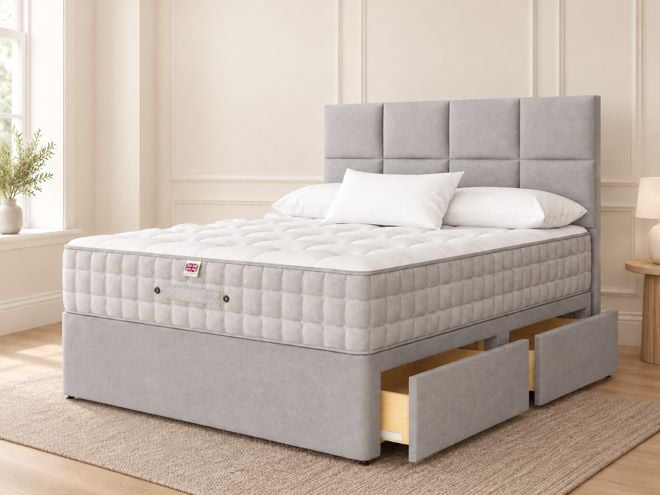
Your body is already working harder than usual to recalibrate. If your mattress is making you uncomfortable, too warm, or causing you to shift position repeatedly through the night, you’re interrupting the sleep stages your body urgently needs. A mattress that isn’t right for your body (whether that’s firmness, temperature regulation, or support) can be the difference between your circadian rhythm resetting in two days or five.
This is especially true this weekend, when your body has less tolerance for disruption than usual. A cool, dark, quiet room gives your core temperature the room it needs to drop (which triggers deeper sleep), and the right sleep surface means you’re not fighting physical discomfort on top of everything else your body is dealing with.
If you already sleep well, a good setup will still help you recover faster.
Understanding your body points you straight toward the most effective fixes, because you’re not just fighting tiredness – you’re helping an entire internal system find its footing again.
Get outside early on Sunday morning. Light is the primary signal your circadian rhythm responds to. Even 10 – 15 minutes of natural daylight shortly after waking suppresses residual melatonin and helps anchor your body clock to the new schedule. It’s one of the most effective things you can do.
Resist the long lie-in. Counterintuitive, but a lengthy lie-in on Sunday shifts your sleep window even later and deepens the misalignment. Try to wake within an hour of your usual time.
Improve your sleep setup. A cool, dark, and quiet room gives your body temperature the opportunity to drop and lets melatonin work without interference. This is where your mattress earns its place. Physical discomfort is one of the most underrated barriers to the sleep your body needs right now.
Cut caffeine off at 2 pm this weekend. Caffeine has a half-life of around five to six hours – so an afternoon coffee is still active in your system at bedtime, delaying sleep onset and reducing sleep quality when you can least afford it.
Keep any nap under 20 minutes. If Sunday afternoon hits you hard, a short nap can take the edge off without pushing your evening sleep window later. Anything longer risks pulling you into deeper sleep stages, leaving you groggy and making things worse come bedtime.
For future clock changes, nudge your schedule in advance. Going to bed 15–20 minutes earlier for two or three nights beforehand is a well-evidenced way to soften the landing [²].
The clocks going forward each spring are a useful annual reminder that sleep isn’t just something your body falls into, it’s an active, finely tuned biological process. And the environment you sleep in isn’t a luxury detail. It’s the foundation that the process runs on.
Your circadian rhythm will reset within a few days for most people. But if you regularly wake up unrefreshed, struggle to stay asleep, or never quite feel restored, the clock change isn’t the cause of that. It’s just a lens that makes it easier to see.
If that sounds familiar, it might be time to take a closer look at your sleep setup. The right mattress, the right temperature, the right environment, they won’t fix a disrupted body clock overnight. But they absolutely determine how quickly your body can do what it’s already trying to do.
Clocks go forward at 1:00am on Sunday 29th March 2026. British Summer Time (BST) runs until Sunday 26th October 2026, when the clocks go back.